
Surviving the Winter With Your Dog: Staying Sane with Freezing Temperatures and Shortened Daylight!
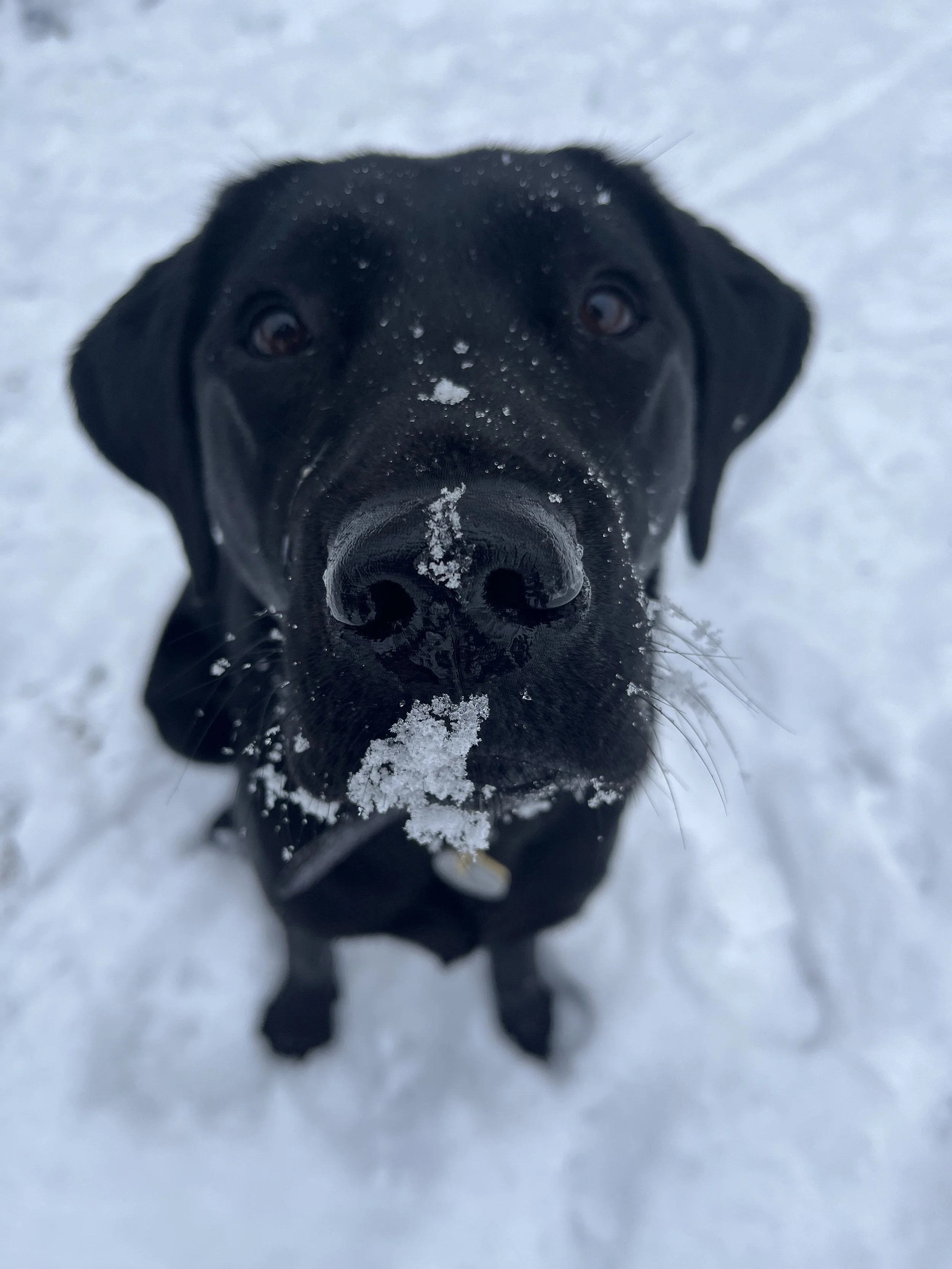
Image Description: A black lab sits in the snow and looks up at the camera. The camera is above the dog and she has snow on her chin and nose
Surviving the Winter With Your Dog: Staying Sane with Freezing Temperatures and Shortened Daylight!
Winter flips the script on our routines. The sunlight disappears early, the sidewalks get icy, the wind sneaks under your coat, and your dog and you are both starting to go a little stir crazy. I’m here to tell you that winter doesn’t have to derail your training or sanity — it just asks for a new, albeit creative strategy.
This season is less about doing less and more about doing things differently for your dog! With the right tactics, winter can be a great time to refresh your dog’s training, try out new games or tricks, and bring some snuggles where chaos usually takes over!
Here’s a few of my favorite tips as a professional dog trainer to survive the freezing temperatures and shortened daylight hours this winter!
Tip #1: Restructure your routine, and stop fighting the old one!
To successfully navigate the colder weather and shorter days, it is time to create a new routine and rotation of meeting your dog’s needs! This adjustment will help you both stay safe and a little more sane.
A good winter routine includes:
More intentional outdoor sessions! Check the weather early, plan longer walks for better weather days and warmer times of day. Make a list of alternate options for days it is too cold for outside exercise (keep reading to learn more!)
More indoor movement moments! Try out hide and seek, scent work, or a sniffy walk in a pet friendly store to stay warm
Built-in enrichment time when outdoor time is limited
Mix training time into existing parts of your day:
Morning settle while you drink coffee
A quick stay cue while you lace up boots
Obedience or trick session before dinner
A short indoor loose leash walking session around the house before or after potty breaks
Winter rewards creativity, not bravery!
Tip # 2: Train Smarter, Not Colder!
You don’t need to walk in freezing, dangerous weather to meet your dog's needs! Be smart about the time you spend outside and make the most of it. Take a look at the weather for the week, plan accordingly!
Use warmer days or times a day for sniffy walks, use a long line to allow your dog more room to sniff and explore!
Visit new neighborhoods, trails, or locations to enhance enrichment when appropriate and available
Rent a sniff spot to allow your dog off leash to get their zoomies out, especially with fresh snow!
While summer gives us plenty of incentive to adventure with our dog, winter gives us time to refresh our skills and work towards our goals for the warmer seasons.
Great winter indoor priorities:
Settle and/or place work
Impulse control
Engagement around distractions
Task training
Loose leash walking tune up
Cooperative care
Trick training
These skills, or switch out for any of your goals, are perfect to take on this winter!
Tip # 3: Enrichment Prevents Chaos
With limited or changing outdoor time based on varying conditions, it is important to utilize enrichment to keep your dog fulfilled and reduce boredom, stress, and creative dog-driven choices.
Instead of waiting for behavior to unravel, build a personalized enrichment rotation for your dog:
Scent games
Frozen food toys
Shaping or trick training session
Hide and seek
Snuffle for treats in a toy basket or the yard if safe!
Try out West Paw’s “The Dog’s Best Friend” Game!
Need help developing an enrichment calendar? Email me at contact@centrestagedogtraining.com
Tip #4: Winter Skill Swaps: Replace, Don’t Remove
When something becomes harder outdoors, replace it with an indoor version instead of skipping it entirely.
Examples:
Less park time → More sniff walks inside pet friendly stores!
Less dog-dog exposure → More neutrality reps by windows, doors, or controlled indoor spaces
Less physical activity → More brain work, scent games, hide and seek, and shaping tasks
This creates progress without burnout — for both of you.
Tip # 5: Safety + Setups That Make Winter Easier
A few tweaks to your environment can completely change your winter experience:
A basket by the door with your leash, treats, booties, or paw balm, and towel
A clear indoor training space (hallway, basement, living room rearranged)
Pre-packed training pouches or containers for easy access and quick sessions
When your setup is easy, consistency is easy.
Tip #6: Maintaining Motivation (Even When It’s Dark at 4 PM)
Winter doesn’t have to stall progress — but it does require intentional momentum.
Try:
Weekly “focus goals” (heel, settle, tricks, etc.)
Short daily reps instead of long sessions, 3–5 minutes is great!
Tracking daily or weekly wins or improvements
Mixing fun training and games with essential training
Creating winter-specific goals (indoor heel, cooperative care, retrieving tasks)
Ready to Tackle the Winter Months?
Winter doesn’t mean training takes a back seat and the chaos of a bored dog takes over — it means we adapt and strategize to meet our dogs and our needs. With a few intentional adjustments and a plan, winter becomes less of a hurdle and more of an opportunity.
Change your routine, stay warm, meet your dogs needs, and enjoy the extra cuddles on the couch!